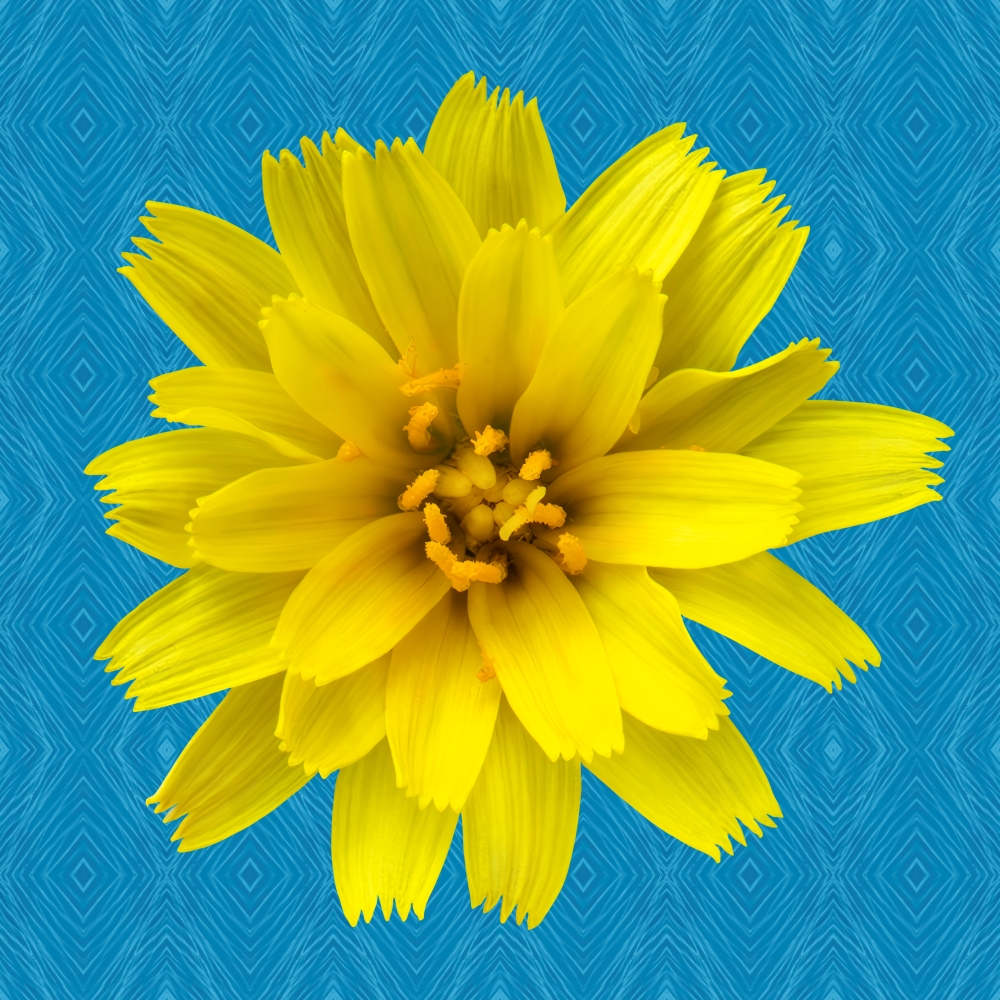
Barkindji artist, Kent Morris, creates a new series of works starring a very small yellow flower with an incredibly powerful story.
For thousands of years, the tubers of the murnong (yam daisy) were a staple food for First Peoples throughout the southeast of Australia, cultivated and harvested in the millions from abundant yellow fields. Following the forced introduction of European farming practices, the murnong almost became extinct and remains critically endangered and rare in the wild.
Now the plants flower symbolises survival, resilience and cultural reclamation in the face of ongoing colonial impacts. FLOWER POWER features murnong flowers and cultural designs created from the wind on water, both generated from photographs taken over many years. The source murnong photographs are of plants Morris has grown in his apartment car park. The photographs of the wind on water were taken at the Menindee Lakes on Barkindji Country. Murnongs grew along the banks of the Barka (Darling River) and prior to colonisation, were a significant food source for Barkindji people.
The works act as portals for reflection and engagement with the significance of this plant and the ecologies of Country. FLOWER POWER reconsiders the fields of yellow that were once across this continent’s southeast, and the murnongs ongoing importance to First Peoples’ knowledge—a symbol of the power of resistance and cultural continuance. Flowers are utilised to celebrate, to congratulate, to mourn, to express love and care, and also to express peaceful resistance to injustice.
The new photographic series coupled with an immersive walk thorough structure at Melbourne’s City Square commissioned for RISING 2O26, represents First Peoples sustainable agricultural practices over thousands of years. The forms symbolise generations of connection to Country, the impacts of colonisation and the survival and revival of Indigenous languages and native food sources.